Spain's Economy: 2.8% Growth Amidst 10.4% Unemployment Rate
"The strength of a nation is often measured by its ability to turn past volatility into future stability."
Spain stands as a massive pillar of the European Union, moving between periods of intense structural shifts and steady growth. To understand its current economic standing, one must look past the tourist vistas and into the hard data of its GDP, trade, and labor markets.
Key Takeaways * Spain represents approximately 1.36% of the global GDP, maintaining a significant footprint in the European market. * Recent data shows a 2.8% GDP growth in 2025, demonstrating resilience despite historical volatility.
* The economy faces a dual reality of growth and structural hurdles, including a 10.4% unemployment rate. * Integration into the EU has provided a framework for stability, moving past the era of massive debt repayment and contraction.

How big is Spain's economy right now? In a sun-drenched Madrid office, an analyst rubs tired eyes while staring at a rising line on a glowing screen.
A quiet office in Madrid hums with the sound of clicking keyboards as analysts review the latest quarterly reports. On a digital screen, the upward curve of a growth chart catches the eye, signaling a period of expansion.
According to the World Trade Organization, Spain's exports grew the most among the 70 members during a specific period.
The scale of the Spanish economy is significant on the global stage. According to World Bank data, Spain recorded GDP growth of 2.8% in 2025. This growth comes after years of navigating complex fiscal landscapes.
While the nation is a major player, it is important to note its relative size; Spain accounts for about 1.36% of the global GDP while representing approximately 0.6% of the world’s population.
Macroeconomic indicators provide a nuanced picture of this scale. While growth is present, the cost of living remains a factor, as World Bank data shows Spain recorded inflation (consumer prices) of 2.7% in 2025.
Additionally, the labor market remains a focal point for policymakers, with the World Bank reporting an unemployment rate of 10.4% in 2025. These figures illustrate an economy that is expanding but still managing significant internal pressures.
| Indicator | 2025 Value (World Bank) |
|---|---|
| GDP Growth Rate | 2.8% |
| Inflation Rate | 2.7% |
| Unemployment Rate | 10.4% |
The transition from past volatility to current growth highlights how much the economic landscape has shifted. But how does this strength translate to the rest of Europe?
How Does Spain Compare Within the European Union?
A diplomat sits in a conference hall in Brussels, reviewing documents that compare the economic trajectories of various member states. The focus is on how much weight each nation carries in the collective European engine.
Spain's position within the European Union is defined by its role as one of the larger economies in the Eurozone. Its integration has been a journey of moving from the periphery to a central role in European policy.
One of the most significant markers of this journey was the management of debt and stabilization programs. For instance, the ESM programme for Spain ended with the full repayment of the credit drawn 18 months later, marking a successful chapter in fiscal recovery.
Comparing Spain to its neighbors involves looking at both productivity and regional strength. While it remains a heavy hitter in the EU, it must constantly balance regional disparities with the overarching goals of the Eurozone.
The ability to maintain growth while managing the complexities of EU-wide regulations has been a defining characteristic of its modern era. The relationship between Spain and the EU is not just about policy; it is about the structural stability provided by the single market.
However, growth on paper doesn't always tell the full story of what makes the engine run.
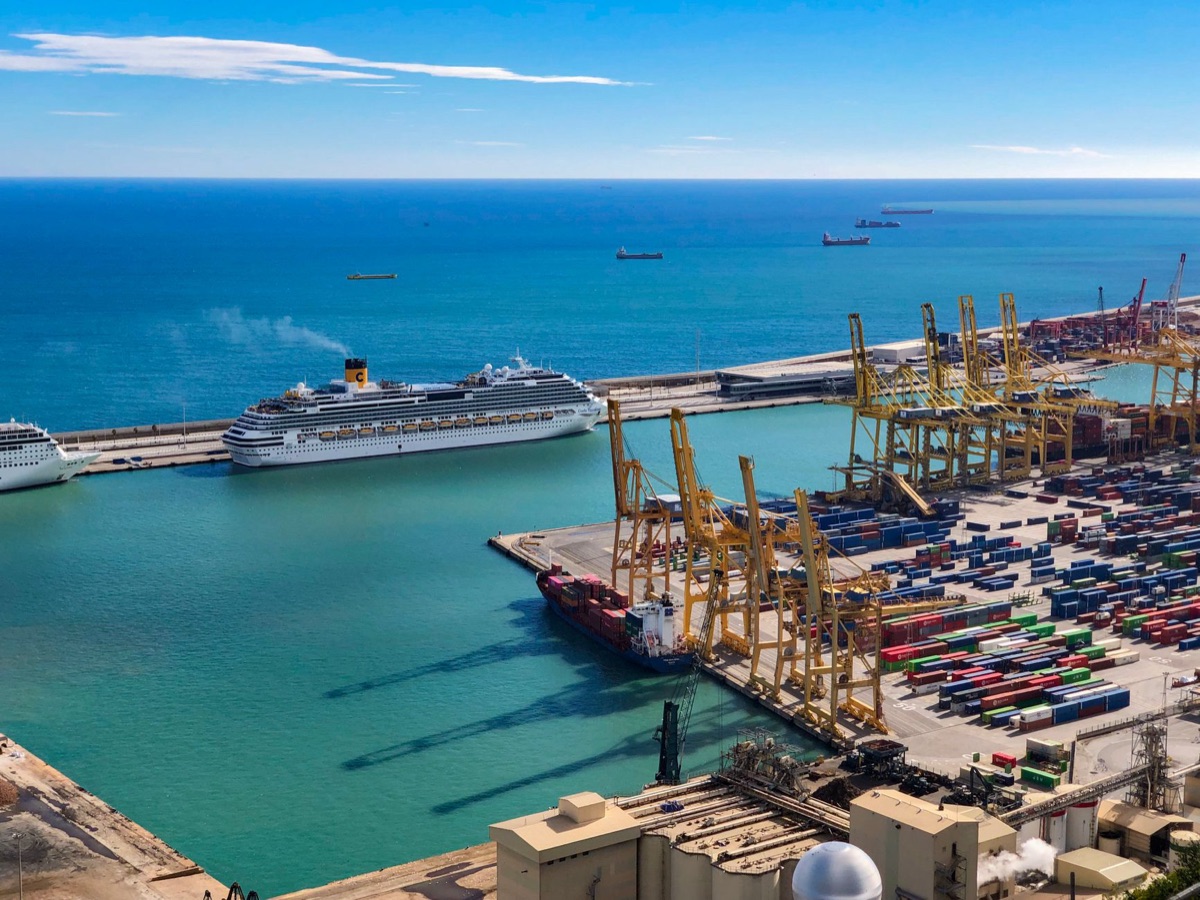
What is driving Spain's economy? A shipping container is hoisted onto a massive vessel at the Port of Valencia, moving goods that represent the fruits of Spanish industry. The rhythmic clatter of the port serves as the heartbeat of trade.
The drivers of the Spanish economy are diverse, moving away from a heavy reliance on single sectors toward a more complex industrial structure. Historically, the economy saw massive shifts due to the construction boom, but modern growth is increasingly tied to trade and services.
During a period of significant transition, among the 70 members of the World Trade Organization (whose combined economies amount to 90% of global GDP), Spain was the country whose exports had grown the most.
This export-driven momentum is a key component of its current engine. By diversifying its trade reach, Spain has managed to tap into global demand, offsetting domestic fluctuations.
The interplay between domestic consumption and international trade creates a dynamic where the economy can react to global shifts. To understand how this engine functions in practice, we can look at the core pillars:
- Export Growth: Leveraging global trade networks to drive industrial output.
- Service Sector: A massive portion of the GDP is driven by tourism and professional services.
- Industrial Diversification: Moving toward higher-value manufacturing and technology.
- EU Market Access: Using the single market to facilitate seamless trade across borders.
Understanding these drivers helps clarify why the economy reacts differently to various global pressures. But how does this new strength compare to the difficult years of the past?
Navigating Economic Shocks: Past Challenges and Resilience
An elderly man sits in a cafe in Barcelona, reading a newspaper about the current economy while remembering the lean years of the previous decade. He remembers when the headlines were much more somber. The IMF worsened estimates for Spain's 2009 contraction to -4% of GDP.
According to the IMF, Spain's 2009 GDP contraction was estimated to be -4%.
To understand current resilience, one must look at the scars left by past economic shocks. The period between 2009 and 2013 was particularly difficult, as in aggregate, GDP decreased almost 9% during that timeframe.
These years were defined by the fallout of the global financial crisis and the bursting of local asset bubbles. The severity of these contractions was evident in 2009.
In July 2009, the IMF worsened the estimates for Spain's 2009 contraction to -4% of GDP, which was close to the European average of -4.6%.
These figures represent a period of intense struggle for the workforce and the state. Navigating these low points required significant policy shifts and structural reforms that laid the groundwork for the current recovery.
The ability to survive such a massive contraction is what built the current institutional resilience. But while the state recovered, the people faced a different reality.
The Role of Labor Market Dynamics
A young professional walks briskly toward a subway station in the morning, checking a smartphone for job listings and economic news. The hustle of the commute reflects the constant movement of the workforce.
The labor market is perhaps the most sensitive indicator of Spain's economic health. While GDP growth shows the economy is moving, the unemployment rate tells the story of the people moving within it.
As noted by the World Bank, the 10.4% unemployment rate in 2025 remains a significant challenge that policy must address.
The mismatch between available skills and industry needs, alongside structural issues in how employment contracts are managed, has historically kept unemployment higher than in some of its northern neighbors.
However, the current growth rate suggests that the labor market is absorbing much of the new economic activity.
| Aspect | Context |
|---|---|
| Growth vs. Jobs | 2.8% growth must be sufficient to lower the 10.4% unemployment. |
| Inflation Impact | 2.7% inflation affects real wage growth and purchasing power. |
| Demographics | An aging population influences long-term labor availability. |
The tension between growth and employment remains the central theme for the coming years.






Comments 0