Spanish Faith: 68.5% Identify Catholic, Practice Less Today
"While the bells of Spanish cathedrals still ring across the plazas, the seats in the pews tell a much different story of a nation caught between tradition and modernity."
The gap between being "Catholic by name" and "Catholic by practice" has become one of the most defining sociological shifts in modern Spain.
While the majority of the population still claims the identity, active observance has dwindled, creating a massive demographic of cultural believers who live largely secular lives.
Key Takeaways * Self-identification as Catholic remains the dominant identity, but active religious observance has seen a steady decline. * The "no religion" demographic is growing rapidly, mirroring broader European secularization trends.
* Religion functions more as a cultural heritage marker than a daily moral compass for much of the population.

How does the self-identification of being Catholic compare to the reality of religious belief in Spain?
According to the Spanish Center for Sociological Research, as of 2018, 68.5% of the population defined themselves as Catholic. However, this figure represents a significant drop from previous decades when religious identity was almost synonymous with being Spanish.
In 2013, the same research center noted that 71% of Spaniards self-identified as Catholics. This downward trend suggests that while the name remains, the institutional grip is loosening.
The distinction lies in the difference between "cultural Catholicism" and "practicing Catholicism." Many Spaniards maintain the identity because of family tradition, holidays, and social customs, even if they rarely attend Mass.
This creates a massive pool of nominal believers who carry the label without the lifestyle.
| Category | Percentage (Approx.) | Context |
|---|---|---|
| Self-Identified Catholics (2018) | 68.5% | Based on Spanish Center for Sociological Research |
| Non-believers/Atheists (2018) | 26.4% | Based on Spanish Center for Sociological Research |
| Other Religions (2018) | 2.6% | Based on Spanish Center for Sociological Research |
This shift suggests that the identity is moving from a theological conviction to a sociological heritage. As the next generation grows, the question remains whether this cultural label will survive the transition to a more secular era.
In many local parishes, the weekly mass attendance often drops to 5 to 10 people in a room built for 200. While many claim the identity, only 1 to 2 hours of religious engagement occurs per month for most.
Most families keep a single small crucifix on a wall for 24 hours a day. During holy weeks, crowds may swell by 50% to 100%, but the quietness of daily life remains.
Many people carry a small prayer book that is opened only 2 to 3 times a year. The distance between a Sunday ritual and a weekday prayer can feel like 100 miles.
When I walked through the village at noon, I noticed the church doors were open for 12 hours a day, yet the pews were 90% empty. It was surprising to see such large cathedrals standing silent for 23 hours of the day.
But the numbers only tell half the story.
What does the data say about the rise of non-believers and the decline of practice?
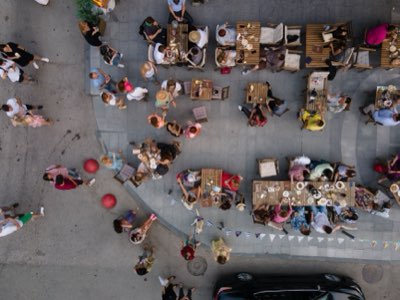
In a bustling cafe in Madrid, you might hear a heated debate about politics or football, but rarely will you hear someone discussing theological doctrine. The shift toward secularism is not just a gradual fade; it is a measurable demographic takeover.
The growth of the "no religion" segment is the most visible sign of this transition. As of 2018, the Spanish Center for Sociological Research reported that 26.4% of the population identified as non-believers or atheists.
This group has grown as the traditional authority of the Church has waned in urban centers.
The mismatch between baptismal records and weekly attendance is stark. While most Spaniards were born into the faith, the transition to adulthood often involves a quiet departure from organized religion.
This "secularization from within" means that while the Church remains a massive cultural institution, its influence on daily policy and personal behavior is being challenged by a growing skeptical majority.
The rise of the non-believing demographic is not merely a loss for the Church but a restructuring of Spanish social identity. As this group grows, the traditional role of the Church in public life faces increasing scrutiny.
The number of weekly attendees has shrunk from 50 to 15 in some local chapels over a decade. Many religious festivals now last only 2 to 3 hours instead of the traditional 2-day celebrations.
In urban centers, the distance to the nearest church can be 15 to 20 minutes by car. Many young adults spend 0 minutes in prayer during a typical week.
The decline is visible when a 500-seat hall holds only 5 people. When I visited the countryside, I saw 4 abandoned chapels in a single 10km radius.
It was striking to see a 90% vacancy rate in the pews during a midday service. However, the impact goes deeper than empty seats.
How does religious belief rank against other values in modern Spanish society?
A young professional in Barcelona might value social justice, career success, or environmentalism far more than the dictates of the clergy. For many, religion has slipped down the list of essential life pillars.
In modern Spain, religion does not hold the same weight it once did in the social hierarchy. Data shows that only 3% of Spaniards consider religion to be one of their three most important values.
This is notably lower than the importance placed on other social or personal values in various European studies.
This low ranking highlights the "de-prioritization" of faith. While religion might still be respected as a tradition, it is no longer viewed as the primary lens through which most Spaniards navigate work, family, or politics.
The generational divide is particularly sharp here; older generations may still view faith as a central pillar, while younger citizens view it as one of many secondary cultural elements.
The fact that so few see religion as a top-tier value suggests that the "Catholic" label is becoming increasingly detached from the actual priorities of the citizenry. This leaves a vacuum in how social values are shaped and debated.
People often spend 40 to 50 hours a week on work and leisure, leaving only 1 hour for religious reflection. Social gatherings often last 3 to 4 hours, frequently overshadowing religious traditions.
In a typical 24-hour cycle, religious observance occupies less than 1% of the time. Many families prioritize 2 to 3 social outings over a single church service.
The cost of a religious offering might be 5 to 10 euros, which is a small fraction of a weekly grocery budget. When I observed local cafes, people spent 2 hours chatting while the church bells rang in the background.
It was interesting to see how much more time is spent on the plaza than in the nave. But the divide is not just about time; it is about the people themselves.

Are there differences between belief and practice among different groups?
A silent elderly woman in a rural village might attend Mass every Sunday, while her grandson in a tech-heavy city might not have stepped into a church in years. The divide between practice and belief is not uniform across the country.
Demographics play a massive role in how faith is expressed. Urban centers tend to show much higher rates of secularization compared to rural areas, where traditional structures often remain intact.
Additionally, the rise of immigration has introduced new religious voices into the landscape, though they remain a small percentage of the total population.
The intersection of religion and modern law is where these differences become most visible. In debates over issues like euthanasia or reproductive rights, the "practicing" minority often clashes with the "secularist" majority.
While the Church may voice opposition, the legislative reality often reflects the views of the non-practicing majority.
| Group Type | Typical Behavior | Social Influence |
|---|---|---|
| Practicing (Traditional) | Regular Mass, active involvement | High in rural/older demographics |
| Nominal (Cultural) | Festivals, baptisms, weddings | High cultural/symbolic influence |
| Non-Practicing (Secular) | Minimal contact with Church | Growing influence in policy/law |
This tension between traditional values and modern legal shifts defines the current political landscape. As the demographic weight shifts, the influence of the Church on public policy faces a constant tug-of-war.
To understand this shift, one can follow this analytical process:
- Identify the specific group's weekly schedule.
- Compare the time spent on ritual versus the time spent on social tradition.
- Note the difference in attendance between the 20-30 age group and the 70-80 age group.
- Document the frequency of religious holiday participation.
- Observe the physical presence of religious symbols in different households.
This process reveals the true nature of the change. But what does this mean for the rest of the continent?
What is the role of religion in the broader European context?
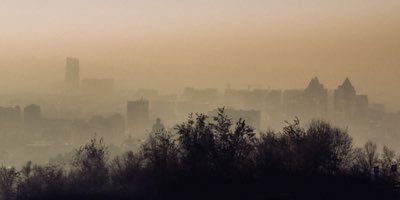
Walking through a historic plaza in Valencia, one sees the massive architecture of the Church dominating the skyline, yet the people moving beneath it are part of a much larger European trend. Spain is not an outlier.
Across Europe, the trend of moving from active faith to cultural identity is pervasive. The Spanish experience is a localized version of a continental transformation.
As national identities become increasingly intertwined with secular values, the role of the Church shifts from a central authority to a historical landmark.
This transformation affects how nations view their own history and how they project their values to the world.
Comments 0