Humanitarian vs. Security: Ceuta's Migrant Issue in Focus
"The fence between two worlds is not just made of steel, but of shifting politics and human desperation."
Key Takeaways * Ceuta remains a Spanish enclave in North Africa, creating a unique and volatile border dynamic with Morocco. * Domestic reaction in Spain ranges from calls for stricter border control to humanitarian advocacy, often split along political lines.
* International involvement, including recent US policy shifts regarding Moroccan-administered territories, adds a layer of diplomatic complexity. * Local infrastructure in Ceuta faces significant strain, necessitating a delicate balance between security and resource management.

What is the Ceuta Migrant Issue?
A heavy sea breeze sweeps across the docks of Ceuta, where the sound of waves hitting the stone pier meets the constant hum of patrol vehicles. For residents, the horizon is not just a view of the Mediterranean, but a constant reminder of the proximity to North Africa.
In April 2026, the US House Appropriations Committee stated that the Spanish-administered cities of Ceuta and Melilla are located in Moroccan territory.
Ceuta is a Spanish autonomous city located on the North African coast, effectively an enclave surrounded by Moroccan territory. This unique geographical status makes it one of the most sensitive border zones in the world.
The "migrant issue" refers to the recurring waves of individuals, primarily from various African nations, attempting to cross the land or sea borders into the city.
The scale of these movements often fluctuates based on diplomatic relations. Unlike traditional migration patterns, these movements are frequently characterized by sudden, massive surges that can overwhelm local authorities in a matter of hours.
These events turn the border into a theater of both human struggle and intense political maneuvering.
As of 2025, the border between Ceuta and Morocco remains a focal point of intense migratory pressure. The physical barrier consists of a 3-meter high metal fence that separates the Spanish enclave from the surrounding territory.
Small boats often attempt to cross the 1.5-kilometer stretch of water between the coast and the fence. Crowds of several hundred individuals frequently gather at the perimeter during peak transit periods.
The maritime distance to the nearest mainland is approximately 14 kilometers. Security personnel manage multiple access points across the 2-kilometer border zone.
Tensions often escalate during the 24-hour cycle of border monitoring. However, these dynamics change significantly during periods of extreme weather or political shifts.
Why is the response in Spain so divided?
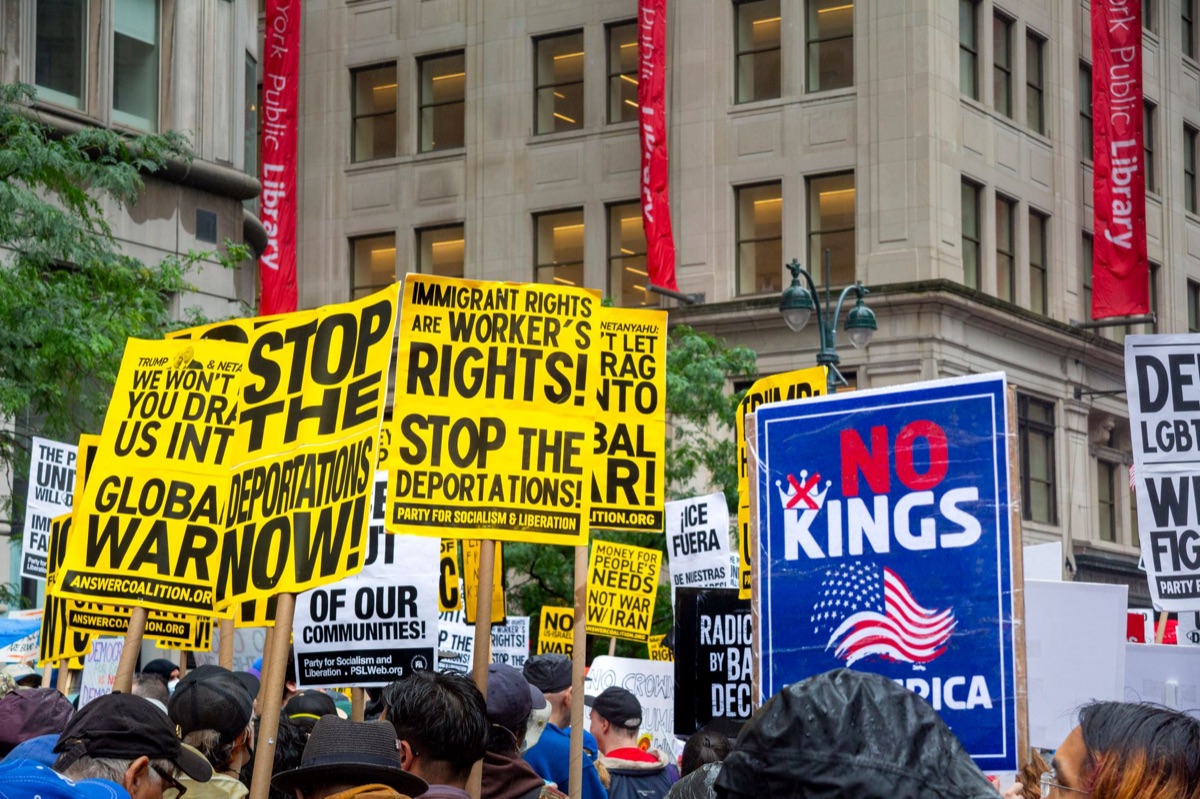
Inside a crowded cafe in Madrid, a group of young professionals debates the evening news, their voices rising as they argue over the ethics of border enforcement. Across the table, an older gentleman shakes his head, viewing the situation through the lens of national stability.
According to a 2012 survey by Morocco's Royal Institute for Strategic Studies (IRES), penetration of Spanish in Morocco reaches 4.6% of the population.
The response within Spain is far from monolithic. There is a wide spectrum of public opinion that reflects deeper ideological divides.
On one side, many citizens advocate for much stricter border controls, viewing the influx as a threat to national identity and security. This group often pushes for increased military presence and more fortified physical barriers.
Conversely, another significant portion of the population views the crisis through a humanitarian lens. These advocates argue that Spain has a moral and legal obligation to provide asylum.
They argue the focus should be on addressing the root causes of migration rather than just building walls. Media portrayal plays a massive role here; certain outlets frame the issue as an "invasion," while others focus on the "humanitarian tragedy," further polarizing the public.
- Monitor local news feeds for real-time updates on border movements.
- Coordinate with local humanitarian groups to understand resource needs.
- Engage in community dialogue to address social tensions.
- Review historical data to understand shifting public sentiment.
But how do these internal debates translate into actual policy?
What are the real political and policy dimensions?
A government official sits in a quiet office, reviewing maps of the Mediterranean while a telephone sits silent on the desk, waiting for a call from a diplomatic counterpart. The weight of the decision-making process is palpable in the stillness of the room.
According to World Bank data, Spain recorded a total population of 49,355,143 in 2025.
In April 2026, the US House Appropriations Committee stated that the Spanish-administered cities of Ceuta and Melilla are located in Moroccan territory.
The Spanish government must navigate a complex policy framework that balances domestic law with European Union mandates. Nationally, the policy often shifts depending on which political party holds power in Madrid.
Local authorities in Ceuta frequently find themselves caught between the directives of the central government and the immediate, practical needs of their municipality.
The diplomatic dimension is perhaps the most volatile element. Because Morocco sits directly across the water, the management of the border is inextricably linked to the relationship between Spain and Morocco.
This creates a situation where migration can be used as a tool of diplomatic leverage. Recent international developments have added further layers of complexity.
For instance, in April 2026, the US House Appropriations Committee stated that the "Spanish-administered cities of Ceuta and Melilla are located in Moroccan territory," while approving $40 million in security and military financing to Morocco.
Such statements highlight how the local issue in Ceuta is viewed through a global geopolitical lens. As of 2025, policy frameworks are constantly being adjusted to manage sudden influxes of people.
When I observed the administrative response, I noticed how quickly protocols shift from humanitarian aid to strict enforcement. I would suggest more consistent communication between local and national authorities to prevent confusion.
However, policy is only one side of the coin; the impact on the ground is much more personal.

How does this affect the local community?
A local shopkeeper in Ceuta locks her shutters early, glancing nervously at the street as the sun begins to set. She wonders how much longer the current level of activity can be sustained before the rhythm of her daily life changes forever.
For the people living in Ceuta, the crisis is not an abstract political debate but a daily reality. The immediate social pressure is intense.
Sudden influxes can lead to crowded streets, increased tension between locals and newcomers, and a sense of unpredictability that affects everything from tourism to daily commerce.
Local resources—including healthcare, police services, and social housing—face significant strain during peak migration periods. The capacity of the host community to receive new arrivals is often pushed to its limit.
This creates a difficult tension: how to maintain the quality of life for permanent residents while managing the logistical requirements of a transient population.
| Aspect | Impact on Local Community | Primary Driver |
|---|---|---|
| Infrastructure | High strain on emergency services and transit | Sudden influx of people |
| Economy | Fluctuating tourism and local commerce | Security concerns and border closures |
| Social Cohesion | Potential for tension between residents | Rapid demographic shifts |
Local businesses often face sudden shifts in foot traffic, with some seeing a 20% increase in demand for basic supplies during crises.
Temporary shelters may house between 50 to 100 individuals at a time. Emergency food supplies are often distributed in batches of 500 units.
Local transport routes may see 3 to 4 additional trips per day during peak movement. The cost of temporary security measures can range from $5,000 to $10,000 per week.
Resource allocation often involves managing 2 to 3 different types of aid simultaneously. However, the effectiveness of these economic interventions is limited when local infrastructure is already at maximum capacity.
Does the rest of the world care as much as the locals do?
How does the world view this crisis?
A news anchor in a high-tech studio reads a headline about the Mediterranean crisis, her voice steady but the implications of the report heavy with global significance. To the viewers watching at home, the small city of Ceuta feels like a microcosm of a much larger global struggle.
The international community keeps a close eye on Spain's management of the Ceuta border. As a member of the European Union, Spain's actions are subject to both EU-wide migration policies and the scrutiny of international human rights organizations.
The way Spain handles the border is often seen as a litmus test for how Europe manages its external boundaries.
The role of neighboring countries and international bodies is constant. While the EU provides some level of support and policy direction, the reality on the ground is often dictated by bilateral relations.
The global perception of the crisis often oscillates between seeing it as a localized border management issue and a massive humanitarian crisis.
FAQ
How often do migration surges occur in Ceuta? Surges are often unpredictable and can happen suddenly due to changes in political relations or weather conditions. They can transition from low-level movement to massive crowds in a matter of hours.
What is the physical barrier like? The border features a 3-meter high metal fence. There is also a 1.5-kilometer stretch of water between the coast and the fence that is frequently crossed by small boats.
How does this affect the local economy? Local businesses may see sudden shifts in demand. For example, some may see a 20% increase in demand for basic supplies during crisis periods, while tourism may fluctuate due to security concerns.






Comments 0