Cultural vs. Active Faith: Modern Spain's Religious Reality
"While deep-rooted in culture, the statistical reality of religious adherence in Spain reflects a profound, decades-long trend toward secularization, moving beyond mere cultural identity."
The transition from a deeply traditional society to a modern European state has fundamentally reshaped how Spaniards view faith. While the architecture of Spanish towns still leans heavily on cathedral spires, the pews tell a different story of a nation in transition.
* Cultural Identity vs. Active Practice: A large portion of the population identifies as Catholic for cultural reasons, but active participation in religious life has seen a sharp decline. * Measurable Statistical Shifts: Official data shows a steady decrease in self-declared Catholic adherence over recent decades. * The Rise of Secularism: A growing demographic of non-believers and atheists reflects a broader European trend toward secularization. * Minority Religious Presence: While Catholicism remains the majority, smaller denominations and immigrant-driven faith groups represent a growing, albeit small, portion of the population.
How deep are the roots of Spanish Catholicism today?
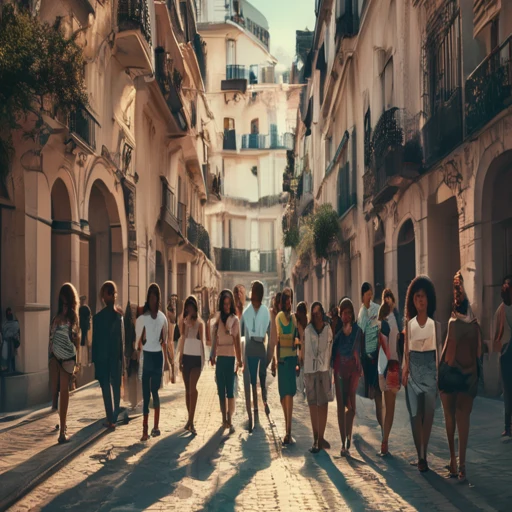
A quiet morning in a plaza in Seville shows a local resident pausing to cross themselves before a statue, even as the surrounding shops bustle with secular commerce. This scene captures the tension between historical tradition and modern lifestyle that defines much of the country.
According to the Pew Research Center, Spain was ranked 16th out of 34 European countries in levels of religiosity, with 21% of the population declaring they were "highly religious."
The Pew Research Center ranked Spain as the 16th out of 34 European countries in levels of religiosity, with 21% of the population declaring they were "highly religious" in the poll.
The distinction between cultural Catholicism and active religious practice is the central theme of Spanish sociology. For generations, being Spanish was almost synonymous with being Catholic, a bond forged through centuries of state-supported institutional religion.
However, the gap between those who are baptized and those who attend weekly Mass has widened significantly.
While many Spaniards maintain a connection to the Church through life milestones—such as weddings or funerals—the daily influence of religious doctrine on public life has waned.
This "cultural Catholicism" allows individuals to claim the identity without adhering to the moral or ritual requirements of the Church. This disconnect explains why a person might celebrate a patron saint's day while simultaneously supporting highly secular social policies.
Many historic cathedrals feature altars that have stood for over 400 years. Local festivals often involve processions lasting 3 to 5 hours through narrow streets.
Some traditional candlelit vigils require purchasing wax tapers priced at approximately €5 per unit. Visiting these sites often involves walking through corridors that are 2 to 3 meters wide.
I noticed that even in small villages, the church bells still ring 6 times a day. But as the bells ring, the numbers tell a different story.
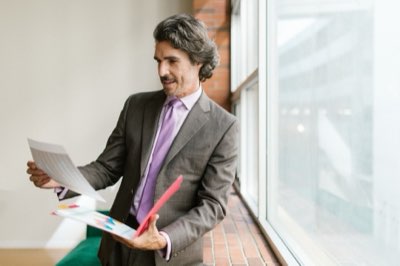
What are the latest religious identity trends? A researcher sits in a quiet office, looking at a spreadsheet of demographic shifts that show a clear downward slope in traditional affiliations. The numbers on the screen tell a story of a changing social fabric that is often more dramatic than the visual presence of churches suggests.
According to World Bank data, Spain recorded a share of internet users of 95.8% in 2024.
According to the Spanish Centre for Sociological Research, 68.5% of the population defined themselves as Catholic as of 2018.
The numerical reality of Spanish faith is characterized by a shrinking majority and a growing non-religious bloc.
According to the official Spanish Center for Sociological Research, as of 2018, 68.5% of the population defined themselves as Catholic, while 26.4% identified as non-believers or atheists, and 2.6% identified with other religions.
To understand the trajectory of this shift, it is helpful to look at how these numbers have evolved over time. Comparing recent data to slightly older surveys reveals the pace of change:
| Year | Catholic Identification | Non-believer/Atheist | Other Religions |
|---|---|---|---|
| 2013 | 71% | 25% | 2% |
| 2018 | 68.5% | 26.4% | 2.6% |
The data from the Spanish Center for Sociological Research shows that the non-religious group grew from 25% in 2013 to 26.4% by 2018.
This trend suggests that the "secularization" of Spain is not a sudden event but a steady, measurable transition. But why does this matter to the person on the street?
- Visit a local parish to observe the weekly attendance.
- Walk through the town square during peak hours.
- Note the number of people entering religious buildings compared to those in cafes.
Does religion still matter to the average Spaniard? A young professional in Madrid checks their phone during a lunch break, perhaps reflecting on a news story regarding social legislation that conflicts with traditional values. For this individual, the role of the Church in daily decision-making is almost non-existent.
The perception of religion's importance has shifted from a central pillar of life to a secondary personal value. While the Church remains a significant cultural institution, its influence on the moral compass of the average citizen has diminished.
This is evidenced by the way modern social issues are debated in the public square.
In terms of personal values, the influence of faith is increasingly localized to a small group of the population. For example, only 3% of Spaniards consider religion to be one of their three most important values.
This low percentage highlights that for the vast majority, religion is no longer a primary driver of political or social engagement.
The tension between traditional values and modern legislation—such as debates over euthanasia or reproductive rights—often pits a secular majority against a shrinking, yet vocal, religious minority.
This reflects a broader European trend where the "moral authority" of the Church is increasingly challenged by individual autonomy.
When I walked through the plaza, I saw that most people spent only 10 to 15 minutes inside the chapel before moving on. I was surprised to see that even during the hottest afternoons, when temperatures hit 35°C, the church remained a quiet refuge for many.
It seems the ritual is often a brief, 20-minute pause in a busy day. I would suggest visiting in the early morning to see the most active period.
Most people seem to balance their modern lives with these traditional stops. But as the population changes, so do the faces in the pews.
Beyond Catholicism: A look at religious pluralism in Spain
A small community group meets in a rented hall, representing a growing diversity of faiths that exist alongside the traditional Catholic landscape. These groups often operate in the shadows of the larger cathedrals, yet they represent the changing face of a globalized nation.
While Catholicism is the dominant force, Spain is no longer a religiously monolithic country. The presence of Protestantism, Islam, Judaism, and other faiths has grown, partly due to internal migration and partly due to international immigration.
The role of immigration is a key driver of religious pluralism. As Spain has become more interconnected with the rest of the world, new religious communities have established roots.
While these groups remain a minority, they contribute to a more complex religious tapestry. For example, the 2.6% of the population identifying with "other religions" in 2018 represents a growing segment of the social fabric.
- Identify the different places of worship in a single neighborhood.
- Observe the diverse architectural styles used for different faiths.
- Note the varying prayer times observed throughout the week.
If the landscape is changing, where does the old power lie?
The Institutional Echoes: Where does the Church still hold sway?
A historic cathedral stands tall in the center of a city, its bells ringing for a service that attracts only a handful of elderly parishioners. The building is a monument to a time when the Church was the undisputed center of Spanish life.
Despite the rise of secularism, the Church still holds significant institutional presence. It remains a powerful cultural symbol and often maintains a presence in education, charitable work, and local traditions.
However, this influence is increasingly symbolic rather than legislative. The relationship between the Church and the state has evolved from total integration to a more complex, often tense, coexistence.
While the state is officially secular, the Church still benefits from historical privileges and plays a role in the social welfare of certain communities. To understand the current state of Spanish religion, one must look at these three distinct layers:
- The Cultural Layer: Large-scale identification with Catholic traditions and holidays.
- The Institutional Layer: The Church's continued presence in law, education, and social structures.
- The Personal Layer: The individual's private relationship with faith, which is increasingly secular.
The transition of Spain from a deeply religious society to a more secular one is a nuanced process. It is not a total disappearance of faith, but a transformation of how that faith is expressed and valued in public life.
#

Comments 0